Most agencies will tell you how to get more traffic. Fewer will tell you why traffic isn’t turning into leads.
There’s a version of the lead-generation problem costing Singapore businesses every month. Not the version where a business is invisible – the version where it shows up on Google, runs paid ads, stays active on social, and still ends the month with a thin pipeline of enquiries.
If that sounds familiar, this article explains where qualified prospects are dropping out – and what a practical demand-capture system looks like in Singapore.
“Getting found is not the same as getting chosen. Most Singapore businesses optimise for the first — without building what makes the second possible.”
Why Getting Traffic Is Not the Same as Getting Leads
Traffic is an input. Enquiries are an outcome. Most digital marketing conversations focus on the input – more visitors, better rankings, higher impressions – without addressing what happens when a prospect actually arrives.
The gap between visibility and enquiries isn’t one failure. It’s a sequence of small friction points across multiple channels, each losing a percentage of interested prospects before they reach the contact form.
Key insight: A modest 2–3% improvement in conversion rate across existing traffic can double enquiry volume – without increasing ad spend.
The 5 Places Singapore Buyers Find You Before They Contact You
Most Singapore buyers discover a business across 2–4 surfaces before making contact. Here’s what each channel needs to do — and where it commonly fails:
| Discovery Surface | What Can Go Wrong | Quick Fix |
| 1. Google Search (organic + paid) | Page ranks but doesn’t quickly establish value, proof, or next step. Ad clicks land on a generic page that mismatches intent. | Service page must answer: who it’s for, what problem it solves, what happens next — within 5 seconds. |
| 2. Google Business Profile + Maps | Outdated photos, no recent posts, unanswered reviews, or missing service details erode trust before the website loads. | Post weekly. Respond to reviews. Treat GBP as a live local SEO channel, not a one-time listing. |
| 3. AI-Assisted Search | Businesses without clear, structured, locally relevant content are skipped in AI summaries even if they rank organically. | Clear content, FAQs, local relevance, and schema markup — the same foundations that make good SEO. |
| 4. LinkedIn | Inconsistent or overly promotional content fails to build the trust that converts a passive viewer into an enquirer. | Post practical, expertise-led content consistently. Credibility accumulates over time. |
| 5. Referral + Digital Verification | A referred prospect still checks the website, GBP profile, and LinkedIn before contacting. Any weak touchpoint loses the referral. | A strong referral still needs a website that confirms the recommendation — clear, current, credible. |
Where Singapore Businesses Lose Prospects Between Discovery and Enquiry
Most businesses struggling with lead generation are present on several of these channels. The problem is conversion friction – small gaps at multiple points that compound into lost enquiries:
| Gap | Impact |
| Weak above-the-fold messaging | Visitors don’t understand who the business serves or why they should stay |
| Missing or buried proof (reviews, outcomes, client logos) | Prospects leave before reaching the evidence that would have converted them |
| Vague or absent CTAs | Interested visitors don’t know the next step — so they don’t take one |
| Poor mobile enquiry path or no WhatsApp option | Mobile visitors face friction that desktop users don’t |
| Ad-to-landing-page disconnect | Specific ad promise lands on a general page — trust breaks immediately |
| Inactive Google Business Profile | No recent posts or reviews signals an inactive business, even if it’s thriving |
None of these gaps is fatal alone. Together, they can reduce enquiry volume by 40–60% from the same traffic and ad spend.
The Demand Capture Checklist for Singapore Service Businesses
Review each area honestly. Most gaps can be identified and addressed within days — no full website rebuild required.
WEBSITE & CRO
- Does every service page answer: who it’s for, what problem it solves, and what to do next?
- Is proof visible near the decision point – not buried below the fold?
- Are CTAs specific? (‘Book a free website review’ beats ‘Contact Us’)
- Is the mobile enquiry path friction-free? Is WhatsApp available for mobile users?
- Does the page load in under 3 seconds?
GOOGLE BUSINESS PROFILE
- Posted or updated in the last two weeks?
- All reviews responded to — positive and negative?
- Service categories, hours, and contact details accurate?
- GBP website links UTM-tagged for GA4 tracking?
SEO & CONTENT
- Do service pages target the commercial-intent searches Singapore buyers actually use?
- Is FAQ content structured for People Also Ask results?
- Do recent blog articles link to relevant service pages?
PAID MEDIA
- Does the landing page match the specific promise of the ad that drove the click?
- Is conversion tracking verified — recording actual enquiry events, not just clicks?
- Is there a process for reviewing lead quality, not just lead volume?
How Hunters Digital Approaches Demand Capture
Most agencies work in one lane. The insight behind Hunters Digital’s model is that the gaps between those lanes – between SEO and the website, between the ad and the landing page, between the GBP profile and the enquiry – are where most lead-generation problems in Singapore actually live. When we work with a Singapore business, we start with the full path from discovery to enquiry, not the individual channel.
If you’re getting traffic, running ads, or investing in content – but not seeing the enquiry volume the spend should generate -the problem is rarely one thing. It’s a connected system problem.
Conclusion
Being visible online is only the first step. What drives business growth is turning that visibility into meaningful conversations with qualified prospects.
If your website is attracting visitors, your Google Business Profile is active, and you’re investing in SEO or paid advertising – but enquiries remain inconsistent – the problem may not be your marketing budget. More often, it’s the gaps between discovery and conversion.
The good news? You don’t always need more traffic. You need a better system that guides prospects from finding your business to confidently choosing it.
At Hunters Digital, we help Singapore businesses identify where potential customers drop off and optimise every touchpoint – from search and ads to landing pages and conversion paths – so your existing marketing works harder.
Ready to turn more of your traffic into enquiries?
Book a Digital Presence Review today, and we’ll show you exactly where your opportunities are – and what to fix first to generate more qualified leads.
Frequently Asked Questions
The most common reasons are a mismatch between what visitors expect and what the page delivers, missing proof near the decision point, and CTAs that are too vague or too aggressive. Traffic measures discovery – enquiries measure persuasion. The gap is almost always on the conversion side, not the traffic side.
Most Singapore buyers cross-check across 2 – 4 surfaces: Google Search, Google Business Profile and Maps, AI-assisted results, LinkedIn, and referral with a digital verification step. Every channel needs to hold trust, not just one.
CRO is the practice of improving how well a website converts existing visitors into enquiries – without increasing traffic. For Singapore SMEs already spending on SEO or paid ads, even a 1-2% improvement in conversion rate can meaningfully increase monthly enquiry volume.
GBP provides basic data: searches, views, and calls. Adding UTM-tagged links to your GBP website button lets you track profile-sourced visits directly in Google Analytics 4.
Most CRO improvements produce measurable changes within two to four weeks. Unlike SEO, CRO works on existing traffic, so results are visible faster.

Suggested Articles
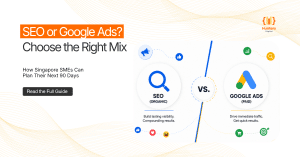
- SEO vs Google Ads for Singapore SMEs: How to Choose the Right Lead-Generation Mix for the Next 90 Days

- From Lead to Revenue: The Tracking Setup Singapore SMEs Need Before Spending More on Ads
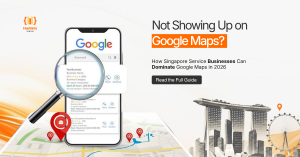
- How Singapore Service Businesses Can Dominate Google Maps in 2026
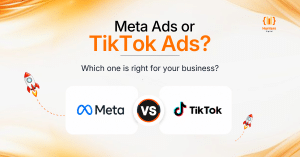
- Meta Ads vs TikTok Ads for Singapore Businesses: A Practical Decision Guide by Industry, Budget, and Goal