


Nearly all online journeys start with a search engine, yet most websites never make it past page two of the results. If that sounds familiar, the problem usually isn’t effort – it’s a handful of avoidable mistakes quietly working against you.
You publish blogs regularly, optimize a few keywords, and expect your website to climb Google’s search results. Months later, your traffic is flat, leads are inconsistent, and competitors continue to outrank you.
More often than not, businesses make SEO mistakes that quietly reduce their visibility. Some issues affect how search engines crawl your website, while others impact user experience, content quality, or trust – and increasingly, whether AI-powered search tools like Google AI Overviews, ChatGPT, and Perplexity cite you at all.
The good news: most of these mistakes are fixable. Once addressed, they can improve rankings, organic traffic, and conversions.
Why SEO Mistakes Cost Businesses More Than Rankings
A ranking drop is the visible symptom. The real cost is downstream: fewer qualified visitors, weaker lead quality, lower conversion rates, and reduced visibility in the AI-generated answers that increasingly sit above traditional search results. Fixing the root causes below addresses all of these at once, not just your position in the SERP.
Quick SEO Health Checklist
Run through this before diagnosing anything deeper:
| # | Question | Yes | No |
| 1 | Is your website mobile-friendly? | ☐ | ☐ |
| 2 | Do all pages have unique title tags? | ☐ | ☐ |
| 3 | Are your pages loading in under 3 seconds? | ☐ | ☐ |
| 4 | Is your Google Business Profile optimized? | ☐ | ☐ |
| 5 | Do you publish helpful, original content? | ☐ | ☐ |
| 6 | Are you tracking SEO with Google Search Console? | ☐ | ☐ |
| 7 | Have you fixed broken links? | ☐ | ☐ |
| 8 | Does every page target one primary keyword? | ☐ | ☐ |
If you checked “No” more than twice, one of the mistakes below is likely the cause.
12 SEO Mistakes Every Business Must Avoid
SEO helps your website appear in search results and attract more potential customers. But even if you’re creating content and optimizing your website, small SEO mistakes can prevent you from getting better rankings.
Many businesses make these mistakes without knowing it. The good news is that most of them are easy to fix. By improving your SEO strategy, you can increase your website traffic, improve your rankings, and attract more leads.
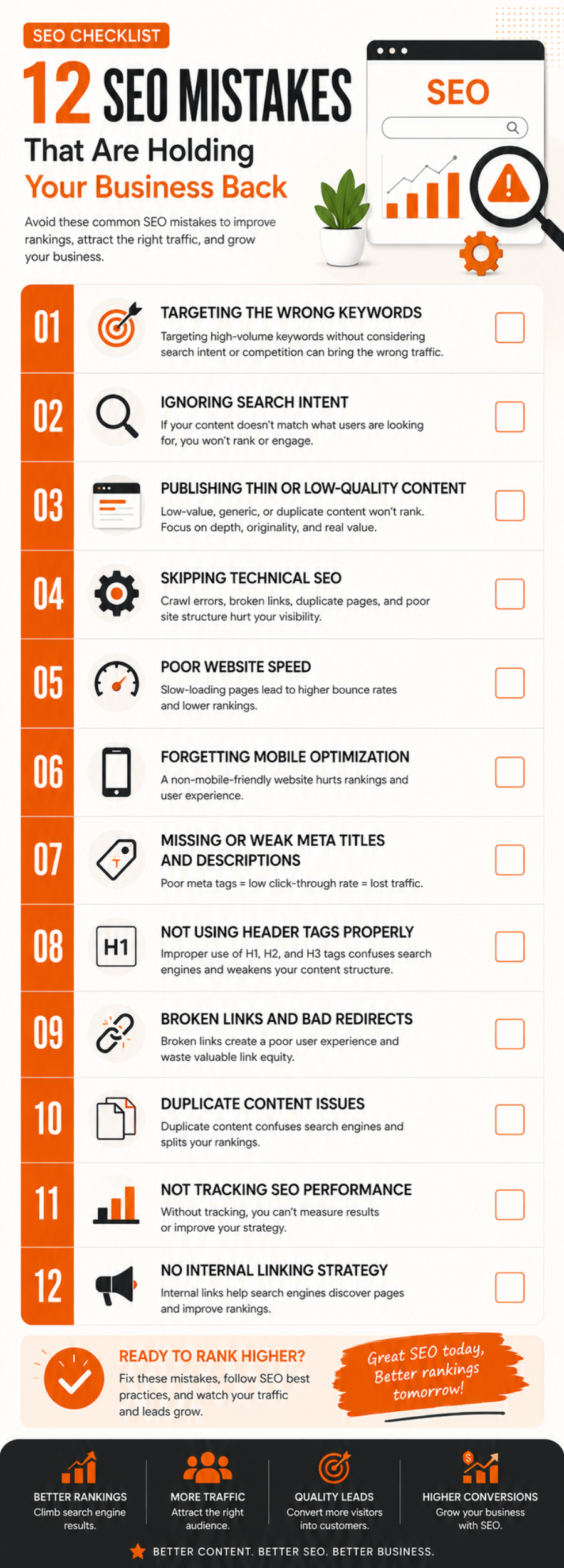
Here are 12 common SEO mistakes that could be holding your business back.
1. Targeting the Wrong Keywords
Many businesses chase high-volume keywords without considering search intent or competition.
For example, trying to rank for a broad keyword like “digital marketing” can be extremely difficult. A more targeted keyword such as “SEO agency in Singapore” or “local SEO services for restaurants” often attracts more qualified visitors.
Instead of focusing only on search volume, consider:
- User intent
- Keyword difficulty
- Relevance to your business
- Conversion potential
Example: A local bakery targeting “cakes” competes against national retailers and recipe sites. Targeting “custom birthday cakes in [city]” instead attracts people ready to order – smaller volume, far higher conversion.
2. Ignoring Search Intent
Ranking for a keyword means little if your content doesn’t answer what users are actually looking for.
For example:
- Someone searching “best CRM software” expects comparisons.
- Someone searching “buy CRM software” is ready to purchase.
- Someone searching “what is CRM” wants educational content.
Matching your content to search intent increases engagement and improves rankings.
3. Publishing Thin or Low-Quality Content
Google rewards content that provides genuine value, particularly under its E-E-A-T framework (Experience, Expertise, Authoritativeness, Trustworthiness).
Pages with only a few hundred words, generic advice, or duplicated information rarely perform well.
High-quality content should:
- Answer user questions completely
- Include original insights and first-hand experience
- Use examples
- Include supporting visuals
- Stay updated
Expert Tip: Before publishing any page, ask yourself: Does this page answer the user’s question better than the top five Google results? If not, improve it with examples, visuals, FAQs, or unique insights.
4. Skipping Technical SEO
Even great content struggles if search engines can’t crawl or understand your website.
Common technical issues include:
- Broken links
- Slow loading pages
- Crawl errors
- Missing XML sitemap
- Duplicate pages
- Poor mobile usability
Regular technical SEO audits help identify and resolve these issues before they affect rankings.
5. Poor Website Speed
Users expect pages to load quickly, and page speed is a direct Core Web Vitals ranking factor. Pages that load within three seconds generally see meaningfully lower bounce rates than slower pages.
Ways to improve speed include:
- Compress images
- Minify CSS and JavaScript
- Enable browser caching
- Use a CDN
- Reduce unnecessary plugins
- Optimize server performance
6. Forgetting Mobile Optimization
Google primarily uses the mobile version of your website for indexing, and mobile devices account for the majority of all Google searches.
Common mobile SEO issues include:
- Tiny text
- Buttons too close together
- Slow mobile pages
- Content wider than the screen
- Poor navigation
A responsive website provides a better experience for both users and search engines.
7. Missing or Weak Meta Titles and Descriptions
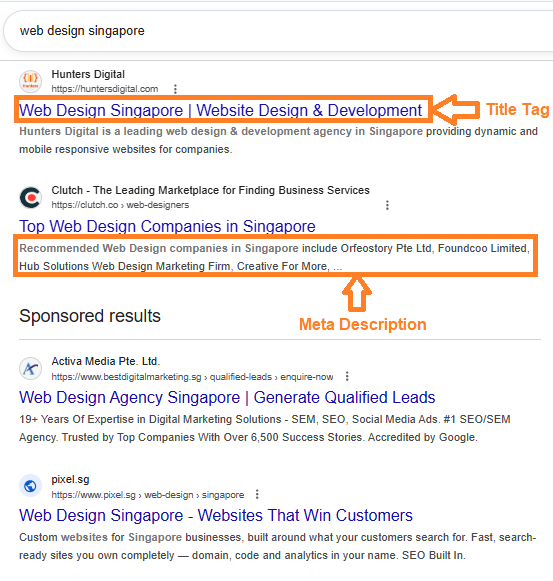
Your title tag and meta description influence click-through rates directly.
Avoid:
- Duplicate titles
- Missing descriptions
- Keyword stuffing
- Generic titles
Instead:
- Include your primary keyword naturally
- Keep titles compelling
- Highlight the benefit
- Encourage clicks
8. Poor Internal Linking
Many businesses publish new content but never connect it to existing pages.
Internal links help:
- Search engines discover pages
- Distribute authority across your site
- Improve user navigation
- Increase time on site
Every important page should be connected through a logical internal linking structure.
9. Ignoring Local SEO
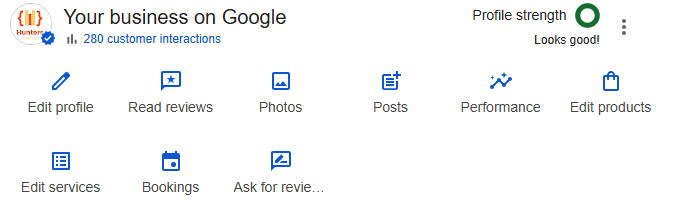
If your business serves a specific location, local SEO is essential.
Common mistakes include:
- Incomplete Google Business Profile
- Inconsistent business information (NAP: name, address, phone)
- Few customer reviews
- Missing local keywords
- No location-specific landing pages
Local SEO helps businesses appear in Google Maps and local search results – often the first thing a nearby customer sees.
10. Not Measuring SEO Performance
Without tracking, you won’t know what’s working.
Monitor:
- Organic traffic
- Keyword rankings
- Click-through rate
- Bounce rate
- Conversion rate
- Indexed pages
- Core Web Vitals
Regular reporting through Google Search Console and analytics helps you catch problems before rankings decline.
11. Ignoring AI Search and Answer Engine Optimization
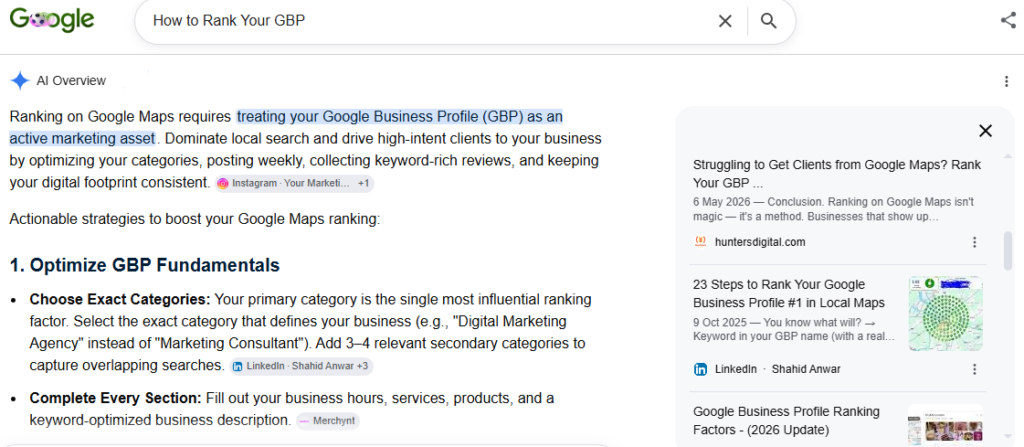
Search is changing fast. People increasingly get answers directly from AI-powered platforms instead of clicking through multiple websites – a shift often described as AEO (Answer Engine Optimization) or GEO (Generative Engine Optimization).
To improve visibility in AI search:
- Answer one clear question per section
- Use descriptive, specific H2 and H3 headings
- Add FAQ sections with schema markup
- Include statistics and cite reliable sources
- Write concise, extractable paragraphs
- Demonstrate first-hand expertise and credibility
- Use structured data where appropriate
Optimizing for both traditional search and AI-generated results gives your content a far better chance of being cited as a source.
12. Treating SEO as a One-Time Task
SEO is an ongoing process, not a one-time project. Competitors publish new content, Google updates its algorithms, and search behavior evolves constantly.
Successful SEO requires consistent effort through:
- Content updates
- Technical improvements
- Link building
- Performance monitoring
- Keyword research
- Competitor analysis
Businesses that continuously optimize their websites generally achieve stronger long-term growth than those chasing one-off fixes.
Download this SEO checklist
SEO Mistakes vs. Best Practices
| SEO Mistake | Impact | How to Fix |
| Wrong keywords | Low-quality traffic | Conduct keyword research based on search intent |
| Thin content | Lower rankings | Create comprehensive, original, valuable content |
| Slow website | Higher bounce rate | Improve Core Web Vitals and page speed |
| Poor internal links | Reduced crawlability | Link related pages strategically |
| Missing local SEO | Lost local customers | Optimize your Google Business Profile |
| Ignoring AI search | Missed AI citations | Structure content with FAQs, clear headings, and schema |
How to Fix These SEO Mistakes
Avoiding SEO mistakes isn’t about chasing every new trend or algorithm update. Instead, it’s about building a strong foundation that combines technical excellence, valuable content, and an exceptional user experience. Businesses that regularly review their SEO performance are far more likely to identify issues before they begin affecting rankings.
Start by conducting a comprehensive website SEO audit at least twice a year. Review your technical health, content quality, keyword targeting, page speed, internal linking, and backlink profile. Refresh outdated articles with new information, improve pages that have dropped in rankings, and remove or consolidate low-value content where appropriate.
Most importantly, focus on your visitors. A fast, easy-to-use website with helpful content not only improves your Google rankings but also builds trust and helps turn visitors into customers. SEO is an ongoing process, and small improvements over time can deliver lasting results.
Final Thoughts
SEO isn’t just about adding keywords to a webpage. It’s about creating a website that search engines can understand and users genuinely find useful.
By fixing these 12 common SEO mistakes, you can improve your visibility, attract more qualified traffic, and generate better business results over time – across Google, AI Overviews, and answer engines alike.
If your rankings have stalled or organic traffic has plateaued, a comprehensive SEO audit is often the best place to start. Identifying and resolving hidden issues can reveal opportunities that support sustained growth.
Ready to grow your business? Hunters Digital helps businesses rank higher on Google, attract qualified leads, and achieve measurable growth with SEO, Google Ads, web design, local SEO, social media marketing, and data-driven digital marketing. Get in touch today and let’s grow your business online.
Frequently Asked Questions
One of the most common mistakes is creating content without understanding search intent. Even well-written pages may struggle to rank if they don’t address what users are actually searching for.
A comprehensive SEO audit every three to six months is recommended, along with regular monitoring of technical issues, rankings, and website performance.
Yes. Fixing crawl errors, improving site speed, optimizing mobile usability, and resolving indexing issues can make it easier for search engines to understand and rank your website.
Absolutely. Strong SEO fundamentals remain essential because AI search engines rely on authoritative, accurate, and well-structured content. Websites that demonstrate expertise and answer user questions clearly are more likely to be featured in AI-generated search results.
SEO focuses on ranking in traditional search results. AEO (Answer Engine Optimization) focuses on getting your content selected as a direct answer in tools like voice assistants and featured snippets. GEO (Generative Engine Optimization) focuses on being cited as a source by generative AI platforms like ChatGPT and Perplexity. In practice, the same fundamentals – clear structure, credible content, and technical health – support all three.

Suggested Articles
- Google Shopping Ads Singapore: Is Your Product Feed and Product Page Ready to Compete?

- Social Media Management in Singapore: The 90-Day Retainer Scope That Produces a Useful Content System – Not Just a Post Calendar

- Ecommerce SEO in Singapore: A Category-to-Product Discovery Blueprint for Stores Losing Organic Sales

- Website Maintenance in Singapore: What SMEs Should Expect from a Plan That Protects Leads, Security, and Search Visibility