If your Google Ads campaigns have felt unpredictable lately – more erratic spend, fewer qualified leads, or a cost per lead that keeps creeping up – you’re not imagining it. Something has genuinely changed. And if your agency hasn’t told you what it is, that’s a problem worth addressing.
This article explains the two significant developments affecting Google Ads performance for Singapore SMEs right now, what they mean in practical terms, and what you should be doing differently – whether you manage your own campaigns or work with an agency.
What Is AI Max for Search – and Why Does It Matter for Singapore Advertisers?
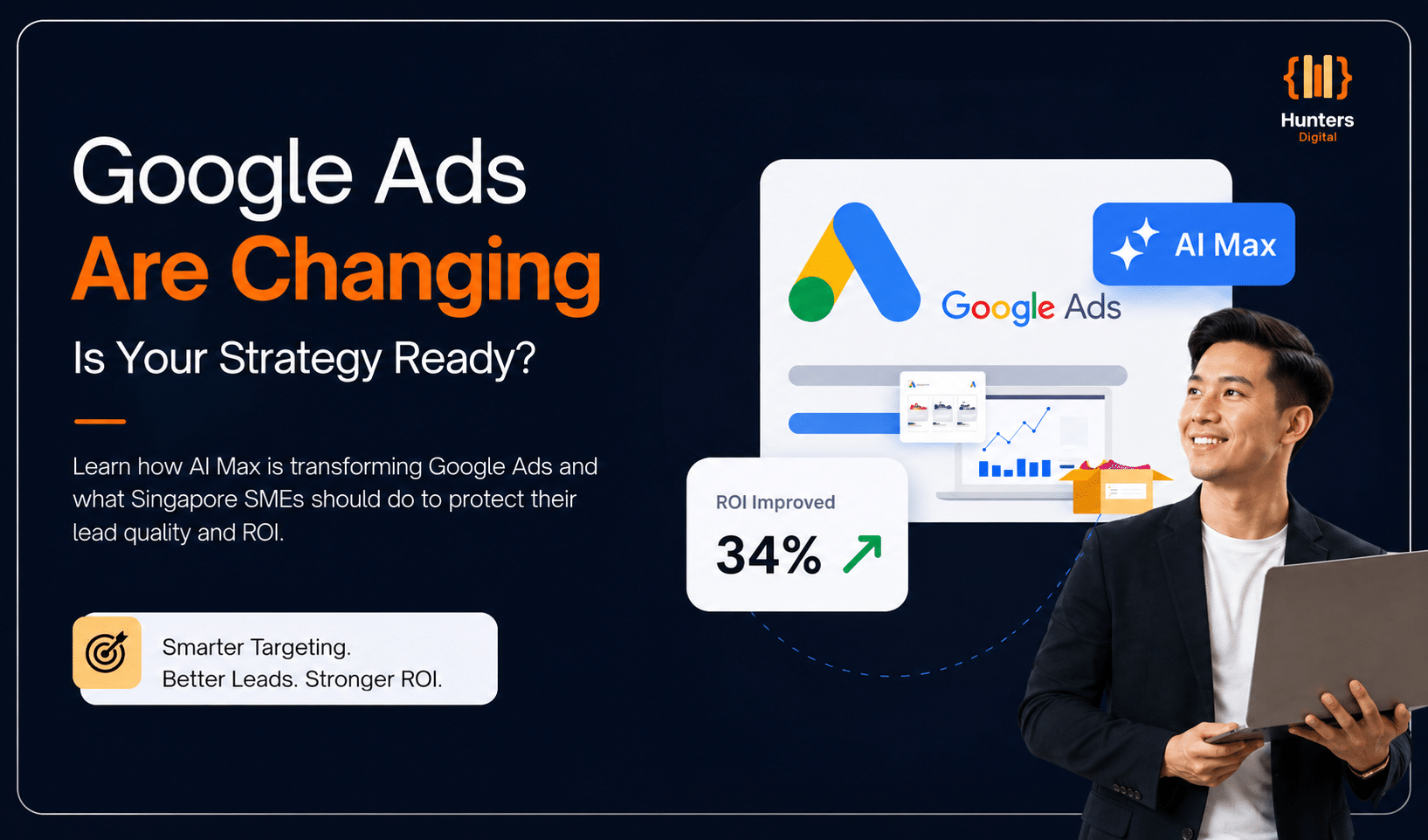
AI Max for Search is Google’s most significant change to how search ads work since the introduction of broad match. It moved out of beta in mid-2026 and is now being actively pushed to all advertisers.
The core change is this: AI Max replaces traditional keyword-controlled matching with intent-based AI targeting. Instead of your ads showing only when someone searches for your chosen keywords, Google’s AI now interprets what a user is trying to achieve – and serves your ads based on that inferred intent, even when the search terms don’t match your keyword list.
For Singapore SMEs, this has two immediate effects:
- Your ads may start appearing for searches you never anticipated or approved
- Your campaign reach expands – sometimes significantly – without a budget increase
In theory, this sounds like a positive. In practice, expanded reach without corresponding improvements to creative and landing pages typically results in more clicks, higher spend, and fewer qualified leads.
The advertisers who benefit most from AI Max are those who have strong ad creative, clear service positioning, and landing pages that convert well across a broader audience. Advertisers who have been relying on tight keyword control to qualify traffic are the most exposed.
How AI Max Is Changing Campaign Performance Right Now
AI Max is changing Google Ads by shifting from keyword-based targeting to AI-driven intent matching. Google now uses user behaviour, search context, and intent to decide when ads appear. This helps businesses reach more customers but can also bring irrelevant clicks if campaigns are not properly optimised. Here’s what businesses need to know about these changes.
From keyword matching to intent matching – what actually changed
Traditional Google Ads gave advertisers significant control. You chose keywords, set match types, added negative keywords, and your ads showed when searchers used terms close to your list. The ad targeting was explicit.
AI Max shifts this to implicit targeting. Google infers intent from the full context of a search – the query, the user’s location, their device, their browsing behavior, and more – and decides whether your ad is relevant. Your keywords are now signals, not instructions.
Why campaigns targeting niche Singapore audiences are being affected most
For Singapore SMEs with tightly defined audiences – a clinic in Tampines, a law firm serving commercial clients, an F&B distributor serving HoReCa buyers – the shift to intent-based matching can mean your ads start reaching audiences that are adjacent to your ideal client rather than matching them directly. This creates volume without quality and is a primary driver of rising cost per lead.
Budget volatility: why ‘limited by budget’ campaigns behave differently
Google’s August 2026 bidding algorithm update specifically affects campaigns flagged as ‘limited by budget.’ If any of your campaigns show this status, the update will change how budget is allocated across the day – and some advertisers have reported significantly uneven spend distribution as a result. Notifications for affected campaigns are expected to begin rolling out from 6 July.
The August 2026 Bidding Algorithm Change: What You Need to Know
This update applies to campaigns where daily spend is constrained by the set budget. The algorithm change affects how Google’s AI distributes your budget across hourly auction opportunities, which can result in:
- Spend clustering at certain times of day rather than distributing evenly
- Higher auction aggressiveness during peak periods
- Underperformance during your historically strongest conversion windows
If your campaigns are currently capped and you haven’t reviewed your budget strategy, the August change may cause disruption. The fix isn’t simply to increase budgets – it requires reviewing bid strategy, campaign structure, and day-parting settings to ensure Google’s AI is working within parameters that make commercial sense for your business.
3 Signs Your Google Ads Strategy Needs to Adapt
You don’t need to be a Google Ads specialist to recognise when something isn’t working. These are the three most common indicators we see in Singapore SME accounts:
- Cost per lead is rising, but spend hasn’t changed. This typically means click volume is holding steady, but conversion quality is declining – a sign that AI Max is broadening reach beyond your qualified audience.
- Search terms in your reports look unfamiliar. If your search term report shows queries that feel unrelated to your service, AI Max intent matching is working beyond your intended scope and needs to be reined in.
- Your conversion rate has dropped even though traffic is stable or growing. Broader reach + same landing page = lower conversion rate. This is the most common outcome of AI Max without corresponding CRO work.
What Singapore SMEs Should Do Differently Right Now
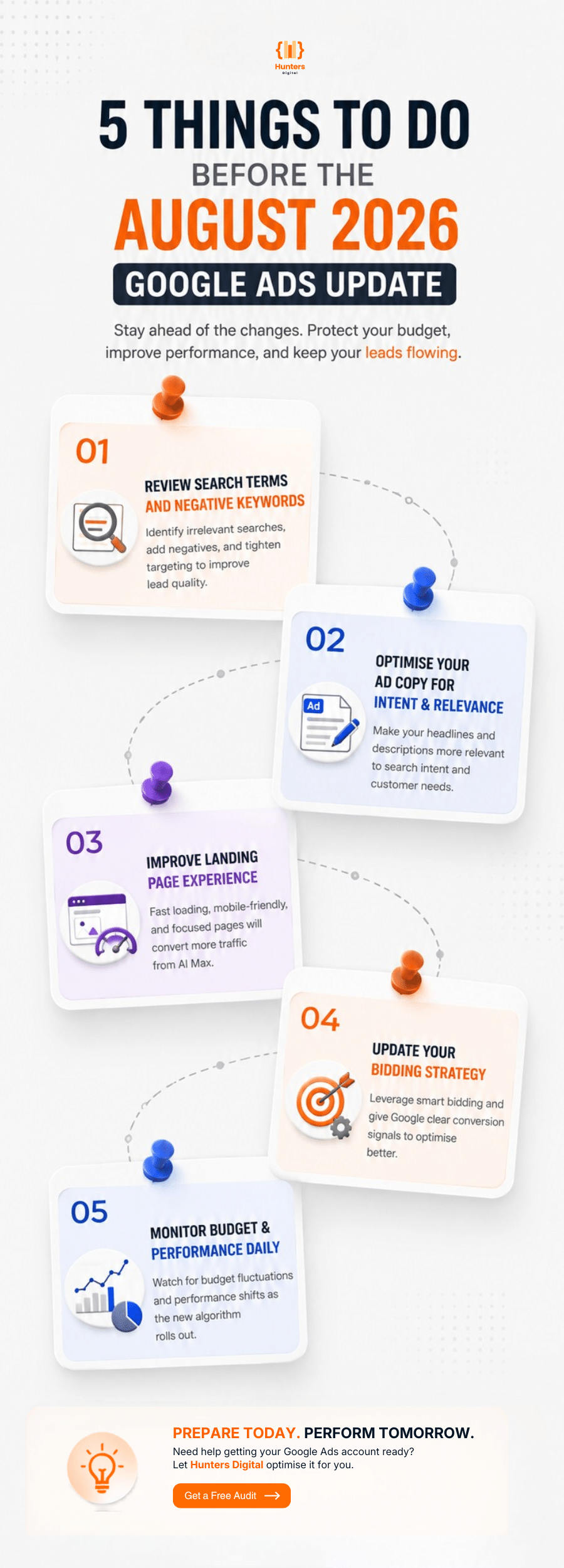
There are five areas to review immediately:
1. Audit your search term reports weekly
AI Max’s expanded reach means your search term reports now contain more data than ever. Reviewing them weekly and adding negative keywords for clearly irrelevant searches is essential to prevent wasted spend.
2. Strengthen your ad creative
AI Max’s intent-based matching works best when your ad copy is specific and differentiated. Generic ads – ‘best digital marketing agency Singapore’ – will attract generic intent. Ads that speak to a specific pain point or audience pull in higher-quality clicks even when reach expands.
3. Improve landing page relevance and conversion rate
Broader reach means a more diverse audience hitting your landing page. A page built for a narrow, high-intent audience may convert poorly for the new, slightly wider audience AI Max brings. Review your landing page messaging, proof points, and CTA against the expanded audience profile.
4. Review your bid strategy against current campaign objectives
If you’re still on manual CPC or target impression share, consider whether target CPA or target ROAS bidding better aligns with how AI Max now operates. AI-assisted bidding strategies are designed to complement intent-based matching – using them together typically improves performance.
5. Prepare for the August bidding update
Before 6 July, identify any campaigns flagged as ‘limited by budget.’ Review their hourly performance to understand when your conversions concentrate. Use this to inform budget and bid adjustments before the algorithm update takes effect.
How to Brief Your Agency (or Evaluate Whether They’re Ready)
If you’re working with a digital marketing agency, these are the questions worth asking in your next meeting:
- Have you activated or reviewed AI Max settings across our campaigns?
- Are you monitoring search term reports weekly since AI Max went live?
- Which of our campaigns are flagged as ‘limited by budget’ ahead of the August update?
- How has our creative been adapted to work with expanded intent-based matching?
- Are our landing pages being reviewed alongside our campaign changes?
An agency that doesn’t have clear answers to these questions is likely managing your campaigns the same way they were 12 months ago – and that approach is no longer sufficient.
Conclusion
Google Ads is changing, and businesses that adapt early will see the best results. Instead of relying on outdated strategies, it’s time to review your campaigns, optimise your ads, and make sure every dollar is working effectively. To stay competitive, Singapore SMEs need smarter targeting, better optimisation, and campaigns built for today’s AI-driven search landscape.
At Hunters Digital, we help businesses adapt, optimise, and get better results from their Google Ads campaigns. From reducing wasted spend to improving lead quality, our team helps you make every advertising dollar count.
Don’t let Google Ads changes slow your growth. Partner with Hunters Digital and turn your campaigns into a powerful growth engine.
Get in touch with us today for a Google Ads strategy review.
Frequently Asked Questions
No. Performance Max runs across all Google channels – Search, Display, YouTube, Gmail, and Maps. AI Max for Search applies specifically to Search campaigns. It changes how your Search ads are matched to queries without expanding to other inventory.
Google is rolling out AI Max as the default for new campaigns and gradually applying it to existing Search campaigns. Most advertisers won’t need to manually opt in, but you should check your campaign settings to understand whether it’s already active.
Not necessarily. AI Max changes how your budget is spent – where it finds intent – rather than automatically increasing it. However, if expanded reach brings in lower-quality traffic with a lower conversion rate, your effective cost per lead rises even if total spend stays the same.
AI Max strategies typically need two to four weeks of data before Google’s algorithms optimise effectively. Expect some volatility during the learning period. Changes to creative and landing pages should also be given four to six weeks to demonstrate measurable impact on conversion rates.
No. Pausing campaigns resets performance data and extends the learning period when you restart. The better approach is to review your budget and bid settings before 6 July and make any necessary adjustments so your campaigns are in the right configuration when the update takes effect.

Suggested Articles
- SEO vs Google Ads for Singapore SMEs: How to Choose the Right Lead-Generation Mix for the Next 90 Days

- From Lead to Revenue: The Tracking Setup Singapore SMEs Need Before Spending More on Ads
- How Singapore Service Businesses Can Dominate Google Maps in 2026
- Meta Ads vs TikTok Ads for Singapore Businesses: A Practical Decision Guide by Industry, Budget, and Goal