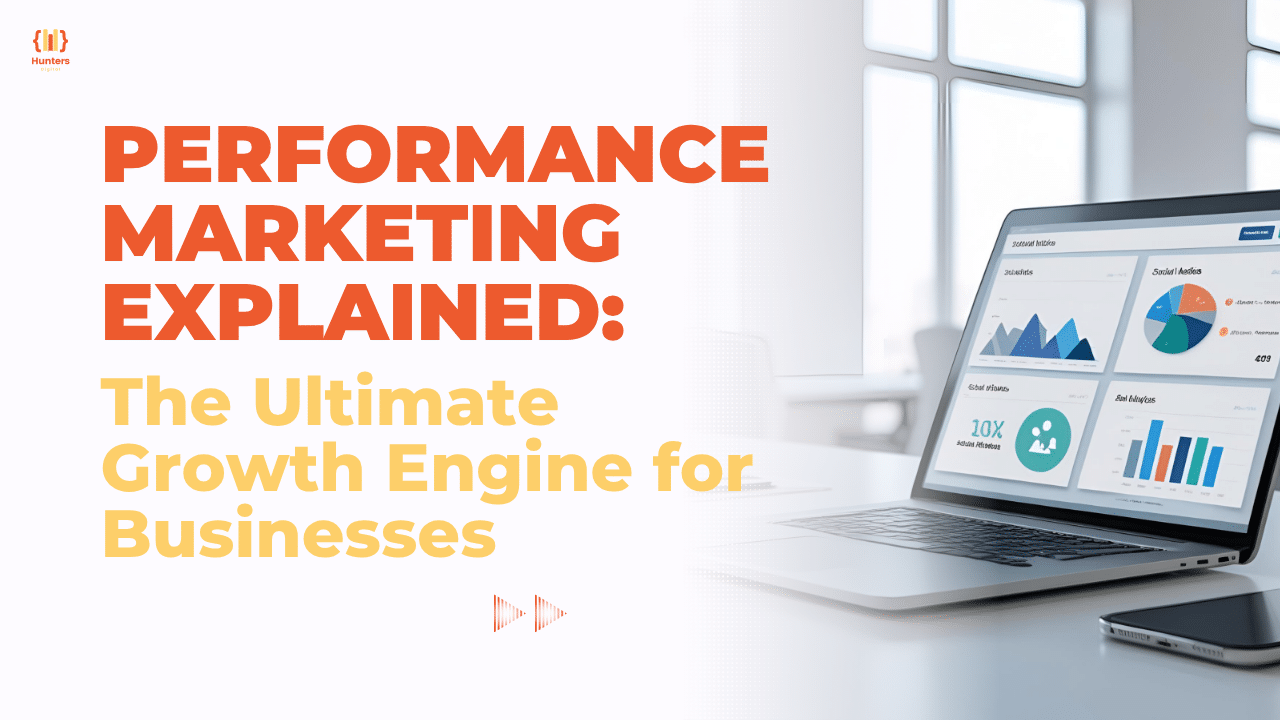

Performance marketing has completely reshaped how businesses approach growth. Instead of spending budgets blindly and hoping for results, brands now demand precision, accountability, and scalability. Every click, impression, and conversion must justify its cost.
This shift has made performance marketing one of the most powerful growth engines in today’s digital ecosystem—especially in competitive markets like Singapore, where customer acquisition costs are rising, and attention spans are shrinking.
This guide explores how performance marketing works, why it matters, and how businesses can use it to drive measurable success.
What is Performance Marketing?
Performance marketing refers to digital marketing strategies where advertisers pay only when a specific action occurs. These actions can include clicks, leads, sign-ups, or purchases.
Unlike traditional advertising methods that focus on exposure, performance marketing focuses on outcomes. Every dollar spent is tied directly to measurable results, giving businesses greater control over their marketing investments.
Common performance-based actions include:
- Website clicks
- Lead generation
- App downloads
- Product purchases
- Form submissions
- Newsletter sign-ups
The ability to measure performance in real time makes this strategy highly attractive for companies looking to grow efficiently.
Why Performance Marketing is Essential for Modern Businesses
Digital transformation has reshaped how customers interact with brands. Online journeys involve multiple touchpoints, and competition continues to intensify. Businesses that rely solely on traditional campaigns often struggle to maintain consistent growth.
Performance Marketing Singapore strategies offer several advantages that make them essential for modern businesses.
1. Measurable Results
Every campaign generates clear data, including:
- Click-through rates
- Conversion rates
- Cost per acquisition
- Return on ad spend
These metrics allow businesses to understand exactly what works and what needs improvement.
2. Cost Efficiency
Performance-based campaigns focus on results rather than exposure alone. Budgets are allocated strategically to channels that generate measurable outcomes.
This reduces waste and improves overall return on investment.
3. Real-Time Optimization
Campaigns can be adjusted instantly based on performance data. Ads that perform well receive increased budgets, while underperforming ads are optimized or replaced.
This continuous improvement cycle leads to stronger campaign results.
4. Scalable Growth
Successful campaigns can be scaled quickly. Once a profitable strategy is identified, businesses can increase budgets confidently to drive more conversions.
Key Channels Used in Performance Marketing
A strong performance marketing strategy uses multiple channels to reach target audiences across digital platforms.
Each channel contributes to the overall growth strategy.
Search Engine Marketing (SEM)
Search engine marketing involves placing ads on search engine results pages. These ads target users actively looking for products or services.
Platforms like Google Ads help businesses capture high-intent traffic at the perfect buying moment.
Benefits include:
- High intent traffic
- Immediate visibility
- Strong conversion potential
- Detailed performance tracking
Businesses in competitive industries often rely on SEM to capture demand at the right moment.
Social Media Advertising
Social media platforms provide advanced targeting capabilities that allow businesses to reach specific demographics.
Brands use Meta Ads Manager for advanced targeting across Facebook and Instagram.
Popular ad formats include:
- Image ads
- Video ads
- Carousel ads
- Lead generation forms
Social media advertising supports brand awareness while driving measurable conversions.
Display Advertising
Display ads appear across websites, mobile apps, and online platforms. These visual ads help build brand visibility and encourage users to revisit websites.
Retargeting campaigns are especially effective, as they target users who have previously interacted with a brand.
Affiliate Marketing
Affiliate marketing involves partnering with publishers or influencers who promote products or services.
Businesses pay commissions only when a specific action occurs, such as a sale or lead submission.
This makes affiliate marketing a low-risk and scalable strategy.
Email Marketing Automation
Email marketing continues to deliver strong performance results when combined with automation tools.
Businesses can nurture leads through personalized campaigns and drive repeat purchases through targeted messaging.
How Performance Marketing Works
Understanding the process behind performance marketing in Singapore helps businesses maximize results and avoid wasted spend.
The process typically includes several stages.
Step 1: Define Clear Objectives
Successful campaigns begin with clear goals.
Common objectives include:
- Increasing online sales
- Generating leads
- Growing website traffic
- Improving brand engagement
Each objective determines the campaign strategy and performance metrics.
Step 2: Identify Target Audience
Audience research plays a crucial role in campaign success.
Businesses analyze:
- Demographics
- Interests
- Online behavior
- Purchase history
This information helps create highly targeted campaigns that reach the right audience.
Step 3: Create High-Quality Ad Creatives
Visual and written content significantly impact campaign performance.
Effective creatives include:
- Compelling headlines
- Clear calls-to-action
- Engaging visuals
- Strong value propositions
Well-designed ads attract attention and drive conversions.
Step 4: Launch Campaigns Across Channels
Campaigns are deployed across selected platforms based on audience preferences and campaign goals.
Continuous monitoring ensures campaigns stay aligned with performance targets.
Step 5: Track and Optimize Performance
Performance tracking tools provide real-time insights into campaign effectiveness. Metrics such as cost per click, conversion rate, and return on ad spend guide optimization decisions.
This ongoing refinement improves results over time.
Key Metrics That Define Performance Marketing Success
Understanding formulas is critical in performance marketing in Singapore because every decision is based on measurable data. These formulas help businesses evaluate performance, optimize campaigns, and scale profitably.
Important metrics include:
1. Cost Per Click (CPC)
CPC measures how much you pay for each click on your ad.
Formula:
CPC = Total Ad Spend ÷ Total Clicks
Example:
- Total Ad Spend = $1,000
- Total Clicks = 500
CPC = $2
Lower CPC helps reduce acquisition costs, but it must be balanced with conversion quality.
2. Cost Per Acquisition (CPA)
CPA calculates how much it costs to acquire a customer.
Formula:
CPA = Total Ad Spend ÷ Total Conversions
Example:
- Total Ad Spend = $2,000
- Total Conversions = 100
CPA = $20
Insight: A profitable campaign ensures CPA is lower than customer revenue.
3. Click-Through Rate (CTR)
CTR measures how many people click your ad after seeing it.
Formula:
CTR = (Total Clicks ÷ Total Impressions) X 100
Example:
- Total Clicks = 1,000
- Total Impressions = 20,000
CTR = 5%
Insight: Higher CTR indicates strong ad creatives and targeting.
4. Conversion Rate (CR)
It shows how many users complete a desired action.
Formula:
Conversion Rate = (Conversions ÷ Total Visitors) X 100
Example:
- Visitors = 2,000
- Conversions = 100
Conversion Rate = 5%
Insight: Improving conversion rate significantly boosts ROI without increasing traffic.
5. Return on Ad Spend (ROAS)
ROAS measures how much revenue you generate for every dollar spent.
Formula:
ROAS = Revenue ÷ Ad Spend
Example:
- Revenue = $10,000
- Ad Spend = $2,000
ROAS = 5x
Insight: Higher ROAS indicates more profitable campaigns.
6. Customer Lifetime Value (LTV)
LTV estimates the total revenue generated from a customer over time.
Formula:
LTV = Average Purchase Value × Purchase Frequency × Customer Lifespan
Example:
- Avg Purchase = $50
- Frequency = 4 times/year
- Lifespan = 3 years
LTV = $600
Insight: Higher LTV allows businesses to spend more on acquisition.
Benefits of Performance Marketing for Businesses in Singapore
Companies adopting performance marketing in Singapore experience several long-term advantages.
Increased Revenue Growth
Performance marketing focuses on actions that directly impact revenue. Campaigns generate qualified leads that convert into paying customers.
Better Budget Allocation
Real-time insights allow businesses to allocate budgets toward top-performing campaigns. This improves efficiency and reduces unnecessary expenses.
Strong Competitive Advantage
Businesses that adopt data-driven marketing strategies outperform competitors relying on outdated methods. Performance marketing supports faster decision-making and better campaign results.
Improved Customer Insights
Campaign analytics reveal valuable customer data.
Businesses gain insights into:
- Buying behavior
- Preferred channels
- Content engagement
These insights support smarter marketing strategies.
Performance Marketing vs Traditional Marketing
Understanding the difference between these two approaches highlights why performance marketing continues to gain popularity.
Traditional Marketing
Traditional marketing focuses on visibility and reach.
Examples include:
- Television advertisements
- Print ads
- Billboards
- Radio campaigns
While effective for brand awareness, measuring results can be challenging.
Performance Marketing
Performance marketing prioritizes measurable outcomes.
Advantages include:
- Transparent reporting
- Data-driven decision-making
- Flexible budgets
- Precise audience targeting
This results-focused approach supports faster business growth.
Common Mistakes That Kill Performance Marketing Campaigns
Even with the right channels and budget, campaigns can underperform. These are the most common mistakes:
1. Tracking That Is Not Set Up Properly
Running ads without reliable conversion tracking is like driving at night without headlights. Faulty pixel setups, missing UTM parameters, and unverified server-side events are more common than most businesses realise, and they corrupt the data that every optimisation decision depends on.
2. Ignoring the Landing Page
Ad creative and targeting get all the attention, but the landing page is where conversions actually happen—or do not. A high-performing ad sending traffic to a slow, generic, or unclear landing page will always underdeliver. Performance marketing treats the full funnel, not just the ad.
3. Optimising Too Early or Too Late
Pausing campaigns after 48 hours because the data looks bad—or running poor campaigns for months, hoping they will improve—are both costly errors. Machine learning algorithms need time to find their rhythm, but genuine underperformers must be cut decisively. Timing optimisation decisions correctly is a skill that comes from experience.
4. Not Testing Creative Consistently
Ad fatigue is real. Audiences in Singapore see hundreds of ads daily. A creative that performed brilliantly three months ago may now be invisible. Continuous creative testing—new hooks, formats, and new angles—is not optional in a mature performance marketing operation.
Why Businesses Choose Hunters Digital for Performance Marketing Singapore
Working with experienced professionals significantly improves campaign success rates. Hunters Digital delivers results-driven strategies tailored to business goals.
Key strengths include:
- Data-driven campaign planning
- Advanced audience targeting
- Continuous optimization
- Transparent performance reporting
- Scalable marketing solutions
Businesses partnering with Hunters Digital gain a competitive edge in the fast-paced Singapore market.
Conclusion
Performance Marketing has become the ultimate growth engine because it combines speed, data, and accountability. In a high-cost digital landscape like Singapore, brands need measurable returns, not assumptions.
With rising CPCs, stronger competition, and smarter consumers, businesses that test, optimise, and scale strategically will dominate their markets.
Businesses need more than clicks. They need revenue. A strong growth partner combines strategy, paid media, analytics, content, and conversion optimisation into one engine.
That is where Hunters Digital can support businesses aiming to scale faster, smarter, and profitably.
Hunters Digital delivers tailored performance marketing solutions in Singapore designed to generate measurable results and maximize return on investment. From strategy development to campaign optimization, every step focuses on driving real business outcomes.
Ready to turn ad spend into measurable growth? Connect with us today and build a performance marketing strategy designed for real ROI.
FAQs
Performance marketing is a subset of digital marketing focused entirely on measurable results. While digital marketing includes branding and awareness campaigns, performance marketing ensures payment is tied directly to outcomes like clicks or conversions.
Singapore’s digital market is highly competitive, making it essential for businesses to use targeted, data-driven strategies. Performance marketing approaches allow brands to maximize ROI while staying ahead of competitors.
Results can appear within days of launching campaigns, especially in channels like search and social media advertising. However, consistent optimization is required for long-term success.
Almost every industry can benefit, including e-commerce, healthcare, finance, education, and real estate. Any business aiming for measurable growth can leverage performance marketing.
Budgets vary depending on goals, industry, and competition. A flexible budget allows for testing and scaling campaigns based on performance.
ROI is calculated using metrics like ROAS, CPA, and conversion rates. These metrics provide a clear picture of campaign effectiveness
Popular platforms include Google Ads, Facebook Ads, Instagram, LinkedIn, and affiliate networks.
Creative content plays a crucial role in capturing attention and driving conversions. High-quality visuals and compelling copy can significantly improve campaign performance.

Suggested Articles
- Are LinkedIn Ads Worth It for Singapore B2B Companies? A Practical Budget, Offer, and Lead-Quality Framework
- Google Shopping Ads Singapore: Is Your Product Feed and Product Page Ready to Compete?

- Social Media Management in Singapore: The 90-Day Retainer Scope That Produces a Useful Content System – Not Just a Post Calendar
- Ecommerce SEO in Singapore: A Category-to-Product Discovery Blueprint for Stores Losing Organic Sales